Civic monitoring report
Provision of bonuses for the use of baby-sitting services
Sent on 3/03/2026 | By Team Child Care Monitor
What we found out
Project objectives Tweet
 The project “Provision of bonuses for the use of baby-sitting services” aims primarily to support families with children through financial measures designed to promote work–life balance.
The bonus amounts to €600; for certain categories of beneficiaries, the amount may increase up to €1,000, as specified in the following sections.
Foreseen activities
The planned activities concern the provision of the baby-sitting bonus for services carried out starting from March 5, 2020, following the suspension of early childhood education services and school activities of all levels under the Decree of the President of the Council of Ministers of March 4, 2020, for a continuous or split period not exceeding fifteen days.
The operational procedures for accessing the bonus were established by INPS, pursuant to Article 23, paragraph 10, of Decree-Law 18/2020. The Institute monitored the applications received and reported the results to the Ministry of Labour and Social Policies and the Ministry of Economy and Finance. If the overall spending limit for 2020 (€1,261.1 million) was exceeded, INPS rejected the submitted applications.
The bonus was provided through the “Family Booklet” (Libretto Famiglia), referred to in Article 54-bis of Law No. 50 of April 24, 2017, consisting of payment vouchers with a nominal value of €10. To use the bonus, applicants had to purchase the Family Booklet via the INPS website or at Poste Italiane and register on the dedicated online platform; prior registration was also required for the domestic worker.
On the OpenCoesione website, the planned end dates of the project are indicated as 31/12/2023, while the actual end date is not available; it also shows that funds remain unspent. Indeed, the allocated resources were € 178,000,000.00, but only € 47,880,550.00 were spent.
Project origin
The baby-sitting project was launched at the outbreak of the COVID-19 pandemic, declared by the World Health Organization on March 11, 2020, following the declaration of a state of emergency in Italy by the Council of Ministers on January 31, 2020.
It was formalized through an administrative act and/or public call to support families after school closures, pursuant to Article 23 of Decree-Law No. 18 of March 17, 2020 (the so-called “Cura Italia”), converted into law with amendments by Law No. 27 of April 24, 2020.
Beneficiaries
The beneficiaries of the monitored project (baby-sitting bonus under Decree-Law 18/2020) are working parents identified in Article 23 of the decree.
In particular, the following could access the benefit:
• Private-sector employees;
• Workers exclusively enrolled in the Separate Management Scheme of INPS;
• Self-employed workers enrolled in INPS;
• Self-employed workers not enrolled in INPS, subject to notification of beneficiary numbers by their respective social security funds;
• Employees in the healthcare sector (public and accredited private)—doctors, nurses, biomedical laboratory technicians, radiology technicians, healthcare assistants—as well as personnel in security, defense, and public rescue services involved in the COVID-19 emergency (for this category, the maximum amount was increased to €1,000).
The benefit was also granted to foster parents.
An essential condition for access was that both parents were employed and that there was no other parent in the household who:
• Was receiving income support instruments due to suspension or termination of employment;
• was unemployed or not working.
The project was monitored by INPS, which verified compliance with the spending limit established by the decree and could reject applications if the allocated resources were exceeded
Context
The project operates in a national context.
Progress
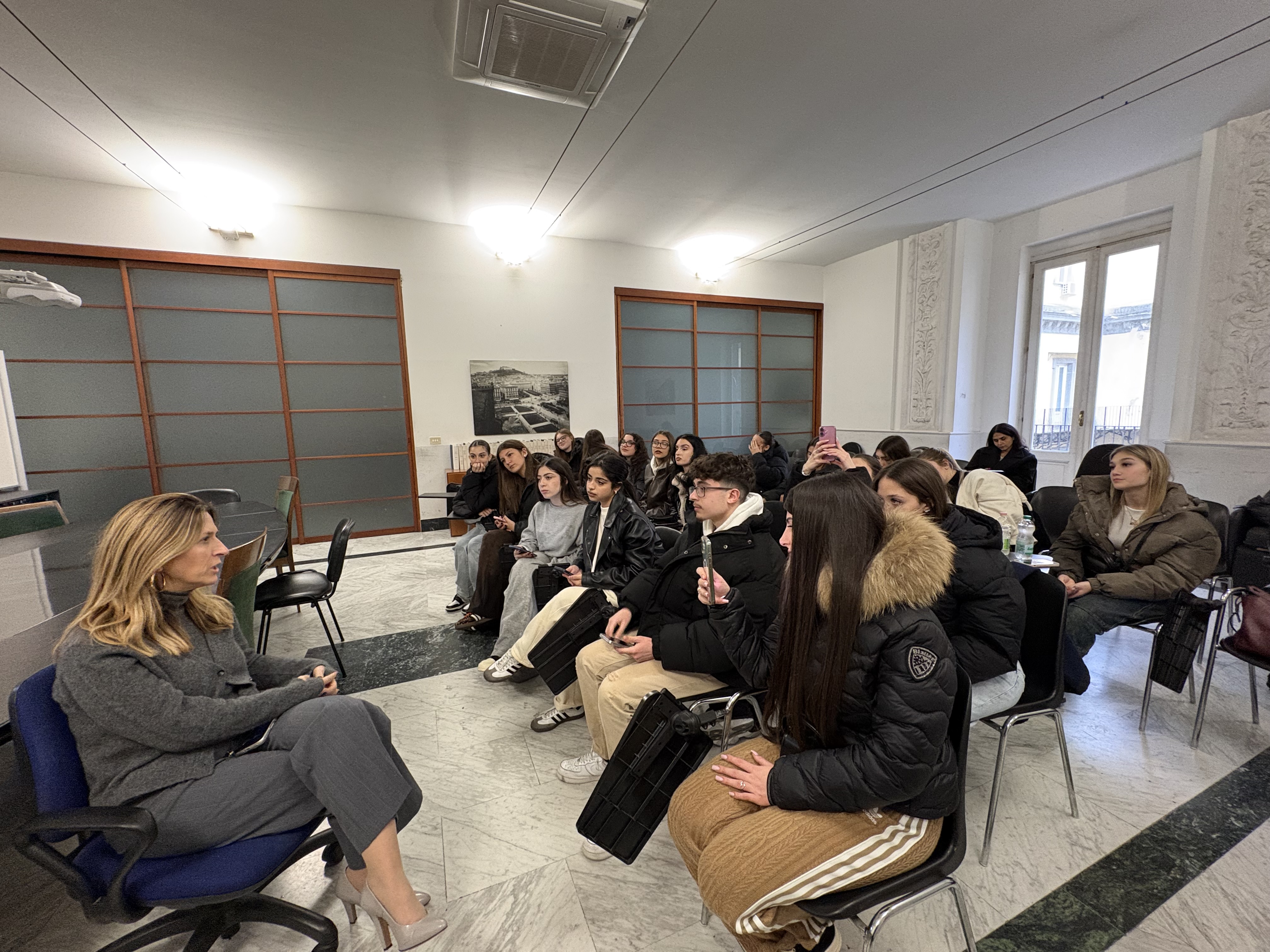
According to the interview with the Councillor for Social Policies of the Municipality of Naples, Chiara Marciani, the “Baby-Sitting Bonus” project, funded through Cohesion Funds, was regularly implemented through a public call and made operational for beneficiary families.
The administration managed the publication of the call, the allocation of resources, and information support, collaborating with INPS to identify potential recipients.
However, the allocated funds were not fully used. Financial progress is therefore partial: the measure was activated and used, but resources were not completely absorbed. Among the reasons cited are communication that was not sufficiently widespread and uneven used across the territory.
Results
The project produced positive but limited results compared to its potential within the territory.
From the data collected through our family questionnaire (percentages rounded to one decimal place):
• 14.5% of families experienced initial difficulties in understanding the application procedures;
• 21% declared themselves satisfied with the organization once the service was activated.
Weaknesses
• Incomplete use of allocated funds.
• Communication not sufficiently effective or widespread.
• Lack of structured impact monitoring.
• Absence of dedicated physical help desks.
Strengths
• Implementation through a public call ensuring transparency and equal access.
• Collaboration with INPS, enabling access to updated data on households and income-support beneficiaries.
• Information support available through phone numbers, email, and municipal offices.
• Attention to vulnerable families, including those with disabled minors.
• Promotion of work–life balance.
Risks
Reduction or discontinuity of funding.
• Low service uptake due to lack of information.
• Persistent access barriers for vulnerable families.
Ideas and solutions
Improve communication and information dissemination.
• Simplify access procedures.
• Increase involvement of families and babysitters in project design.
• Integrate the service with other childcare interventions included in local social plans.
Investigation method
How was the information collected?
- Web research
- Interview with people responsible for the project's planning
- Interview with political leaders
• Beneficiary families;
• INPS (no response received – first support request email sent on December 4th, 2025; then further emails were sent on January 9th and February 9th 2026, without any reply);
• The Councillor for Social Policies of the Municipality of Naples, Chiara Marciani.
Main questions
Question 1:
Was the baby-sitting bonus truly effective and accessible for families?
Question 2:
Why were the allocated funds not fully used?
Main answers
Answer 1:
The bonus was implemented through a public call and was effectively used, but not all families were adequately informed, and no structured impact monitoring was conducted. Furthermore, access was uneven across the territory.
Answer 2:
The resources were not fully absorbed mainly due to insufficiently widespread communication and difficulty in reaching all potentially eligible families, resulting in partial use of the measure.