Civic monitoring report
Grottaglie Airport Test Bed-GATB
Sent on 6/03/2026 | By Team Nodo Alfa
What we found out
Project objectives Tweet
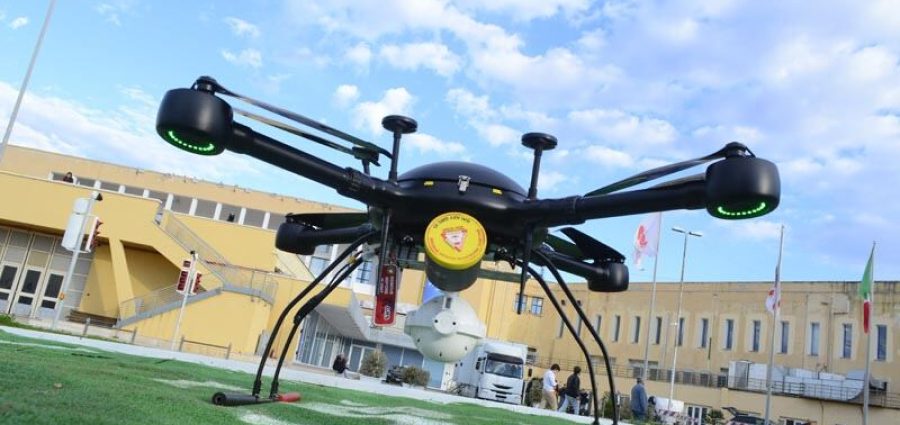 The project Grottaglie Airport Test Bed (GATB) is an advanced research infrastructure developed at the Aeroporto di Taranto-Grottaglie Marcello Arlotta in the Apulia region of southern Italy. The initiative aims to transform the airport into a technological testing platform for the experimentation, validation, and development of innovative aeronautical and aerospace technologies.
The strategic relevance of the project lies in its potential to position Grottaglie as a national and European reference hub for research and experimentation in the aerospace sector, particularly in the field of unmanned aircraft systems (UAS), advanced air mobility, and integrated airspace management. By providing dedicated infrastructure, laboratories, and controlled airspace for experimentation, the project supports collaboration between research institutions, universities, companies, and public authorities.
The main objectives of the Grottaglie Airport Test Bed project include the development of a technological ecosystem that allows the testing of new aeronautical solutions in real operational conditions. In particular, the project aims to create an integrated infrastructure for flight experimentation, develop advanced laboratories for data analysis and technological validation, and support research activities related to drone technologies, satellite navigation, air traffic management, and innovative aerospace systems.
Furthermore, the project intends to stimulate technological innovation, attract research investments, and strengthen the competitiveness of the regional aerospace cluster. Through these objectives, the Grottaglie Airport Test Bed contributes not only to scientific and technological progress but also to the economic development of the territory and the creation of new high-skilled employment opportunities.
Foreseen activities
The Grottaglie Airport Test Bed (GATB) project involves the creation of an advanced infrastructure dedicated to the experimentation and development of innovative aeronautical and aerospace technologies at the Aeroporto di Taranto-Grottaglie Marcello Arlotta.
The activities planned within the project primarily concern the design and implementation of technological infrastructures and research laboratories dedicated to aeronautical experimentation. In particular, the funding has been used to cover costs related to the purchase of scientific and technological equipment, the installation of aircraft monitoring and tracking systems, the development of digital platforms for the management and analysis of flight data, and the creation of advanced laboratories for research and testing activities.
Among the concrete activities planned is also the creation of a controlled operational environment that allows testing in real conditions of remotely piloted aircraft systems (UAS), advanced air mobility solutions, and emerging technologies in the aerospace sector. To support these activities, the project includes the installation of sensors, data collection systems, and digital infrastructures necessary to monitor flight operations and support research and development activities.
The expected outputs of the project include the establishment of specialized technological laboratories, the implementation of infrastructures for aeronautical experimentation, the development of systems for monitoring and managing flight operations, and the creation of a research ecosystem capable of attracting universities, research centers, and companies operating in the aerospace sector.
Regarding the timeline, the project is structured in several phases. The first phase focuses on the planning and design of the infrastructures and research activities. This is followed by the implementation phase, which includes the construction of infrastructures, the purchase and installation of technological equipment, and the activation of laboratories. In the final phase, the infrastructure becomes fully operational and enables the start of testing and research activities using the facilities developed for technological experimentation and innovation projects in the aerospace sector.
Project origin
The Grottaglie Airport Test Bed (GATB) project originates from regional innovation and research policies aimed at strengthening strategic research infrastructures in Southern Italy. The initiative was financed within the POR FESR/FSE 2014–2020 programme of the Apulia Region, which supports projects intended to enhance technological development, research capacity, and innovation ecosystems at the regional level.
The administrative decision to fund the project was taken by the Regione Puglia through specific calls and regional planning instruments dedicated to the development of research infrastructures and the aerospace sector. Within this framework, the project was proposed and implemented by the Distretto Tecnologico Aerospaziale Scarl (DTA), a public–private research consortium that brings together universities, research centers, companies, and institutional stakeholders operating in the aerospace field.
The definition of the project involved several institutional actors, including regional authorities, research organizations, and representatives of the aerospace industry. The initiative was presented and discussed through institutional meetings, technical workshops, and public events aimed at illustrating the objectives and potential impacts of the project for the regional innovation system. These activities helped promote collaboration between public institutions, research entities, and private companies interested in using the infrastructure for experimentation and technological development.
While the project mainly involved institutional stakeholders and organizations active in the aerospace sector, the broader local community was primarily informed through public communication and institutional dissemination initiatives rather than direct participation in the decision-making process. Therefore, some groups of citizens and local stakeholders were not directly involved in the early stages of project definition, although they are expected to benefit indirectly from its economic and technological impacts on the territory.
Beneficiaries
The Grottaglie Airport Test Bed (GATB) project generates benefits for a wide range of actors involved in aerospace research, development, and innovation. Primary beneficiaries include aerospace companies and startups developing drones, eVTOL aircraft, or advanced air mobility technologies, which require a certified testing environment for conducting experiments and validation activities. Research centers and universities, including the University of Bari, the University of Salento, and the Polytechnic University of Bari, also benefit from the use of the facilities for testing, validation, and certification of aerospace technologies. Engineers, researchers, and technicians engaged in aerospace R&D access laboratories, simulation platforms, and flight testing infrastructure, allowing them to enhance their skills and carry out advanced experiments. Students and recent graduates in aerospace engineering, robotics, and related fields can participate in training programs, internships, and research activities directly connected to the project, gaining practical experience in a highly technological environment. Local small and medium-sized enterprises involved in the aerospace supply chain, such as those operating in maintenance, materials, software, sensors, and logistics, also benefit indirectly from the activities and collaborations developed within the test bed. Some segments of the general public not directly linked to aerospace activities may remain excluded from direct benefits, although they may experience indirect advantages through the economic, employment, and technological impacts that the project generates in the territory.
Context
The Grottaglie Airport Test Bed operates within a period of profound transformation in the global aerospace industry. The expansion of the space economy, the entry of private operators into spaceflight, and the spread of innovative technologies such as drones and eVTOL aircraft are redefining the very concept of air mobility.
In this scenario, the need emerges for specialized infrastructure capable of ensuring safe testing, reliable certification, and integration with European regulatory systems.
Italy benefits from a well-established aerospace supply chain, with a strong concentration of expertise in the Apulia region. The management of the airport by Aeroporti di Puglia has facilitated the integration of the project into regional strategies for innovation and infrastructure development.
The presence of a large runway, relatively uncongested airspace, and a solid industrial vocation make Grottaglie particularly suitable for advanced experimental activities.
Alongside leading regions such as Piedmont and Lombardy, Apulia stands out for its ability to integrate academic research, industrial innovation, and public policies focused on technological competitiveness. The project therefore fits into a favorable context consistent with European policies on digital transition, sustainability, and strategic autonomy.
The Italian aerospace industry is undergoing structural transformation toward a civil and highly technological ecosystem. Unmanned systems, supported by advances in electronics and artificial intelligence, have expanded applications in precision agriculture, logistics, environmental monitoring, and civil protection.
In this context, the Distretto Tecnologico Aerospaziale Scarl plays a strategic coordination role among universities, research centers, and companies. Entities such as Salento Droni contribute through specialized training and operational applications, while D-Flight ensures safety and regulation of national airspace through the implementation of the U-space system.
Innovations such as Certiflight, based on the European Galileo satellite system and blockchain technologies, represent a concrete example of integration between advanced research and practical application. The Grottaglie Test Bed is the environment where such solutions are validated in compliance with European requirements, confirming its role as a laboratory of excellence.
Progress
The progress of the Grottaglie Airport Test Bed project has been reconstructed through an integrated analysis of documentary, institutional, and direct sources. In particular, the records related to the POR FESR/FSE Puglia 2014–2020, the official documentation of the Apulia Region, and the data available on the OpenCoesione portal were examined, which allowed verification of the allocation of financial resources and the consistency between planning and implementation. These sources were complemented by information collected during interviews conducted during the monitoring visit, which involved the Mayor of Grottaglie, airport staff, and representatives of the Distretto Tecnologico Aerospaziale Scarl, as well as direct observation of the infrastructure and laboratories located at the Taranto-Grottaglie Airport.
From the overall analysis, it emerges that the project is formally completed from both an infrastructural and financial perspective. The public resources allocated, amounting to approximately eleven million euros, have been committed and accounted for in accordance with the timelines established by the regional operational program. The interventions included the upgrading of airport operational areas, the implementation of security systems, and the installation of technologies necessary for conducting aerospace testing and validation activities. Specialized technology laboratories and a data center dedicated to the collection, processing, and management of data generated by experimental activities were also established.
The monitoring visit allowed direct verification of the actual operability of the facilities, observing the control room for experimental flights, the technological equipment in the laboratories, and the areas designated for test campaigns. These observations confirm that the physical implementation phase of the infrastructure can be considered complete and that the Test Bed is not an unfinished or merely conceptual intervention, but a fully operational platform.
Currently, the project is in a phase of full operational activity and strategic consolidation. Information provided by the Aerospace Technology District and airport staff indicates that controlled experimental campaigns are underway concerning remotely piloted systems, advanced air mobility solutions, and innovative technologies for drone traffic management. Validation protocols and standardized procedures for testing activities have also been defined, in line with national and European regulatory requirements. The GATB thus plays an active role in the aerospace research landscape, functioning as a regulated and certified environment for the development and verification of new technologies.
At the same time, the project has strengthened its strategic positioning at both regional and national levels. Interactions with the municipal administration and representatives of the District have highlighted that the infrastructure is a central element in Grottaglie’s candidacy as Italy’s first spaceport and is part of a broader strategy to reinforce the Apulian aerospace supply chain. Its integration into the National Research Infrastructure Plan and the strengthening of institutional and industrial collaborations confirm the intention to enhance the value of the investments made in the medium and long term.
Overall, the comparison between the initially planned objectives and the results observed shows substantial consistency between planning and implementation. No elements indicate significant delays or structural issues that could compromise the functionality of the infrastructure. The current state of the project can therefore be defined as a phase of consolidation and strategic development, with completed infrastructure, ongoing operational activities, and prospects for further growth within the framework of European policies for innovation, sustainability, and technological competitiveness.
Results
The Grottaglie Airport Test Bed has produced concrete results both in terms of infrastructure and strategic/systemic impact. The first evident outcome is the transformation of the Taranto-Grottaglie Airport into a specialized technological platform for aerospace experimentation. The infrastructure did not remain a theoretical or unfinished intervention; it has been fully equipped with advanced laboratories, monitoring systems, digital tools for drone traffic management, and a dedicated data center for processing experimental data. This represents a tangible and verifiable result, directly observed during the monitoring visit.
A second significant outcome concerns the full operational status of the Test Bed as a controlled environment for validating innovative technologies, including remotely piloted systems, advanced air mobility solutions, and eVTOL aircraft. The value of this result is particularly significant in a European context where the demand for certified testing spaces for aeronautical technologies is rapidly growing. The availability of a regulated and standards-compliant space reduces risks for companies, accelerates experimentation processes, and attracts high-tech investments.
From the perspective of effectiveness, the project demonstrates consistency between declared objectives and achieved results. Public resources have been used to create a functional infrastructure, integrated into the regional innovation system and capable of fostering collaborations among universities, research centers, and enterprises. The role of the Distretto Tecnologico Aerospaziale Scarl as the coordinating body has strengthened the territorial network, contributing to the creation of a structured and non-fragmented ecosystem. This element increases the likelihood that the benefits of the project will be long-lasting and not limited to the funding phase alone.
Another strategic outcome is the strengthening of Grottaglie’s positioning as a candidate for Italy’s first spaceport. Although this objective requires further authorizations and investments, the Test Bed has laid the necessary infrastructural and technological foundations to support this perspective. In this sense, the project’s impact goes beyond the local level, contributing to national competitiveness in the space economy sector.
From our perspective, the project’s utility is high because it addresses a real need in the contemporary aerospace market, namely the requirement for safe and certified environments to test emerging technologies. Its effectiveness appears significant, as the infrastructure is operational, in use, and embedded in a long-term strategy consistent with European priorities on innovation, sustainability, and digitalization. The main added value lies in having transformed an existing infrastructure into a specialized, high-tech hub capable of generating economic, scientific, and employment impacts in the medium and long term.
Weaknesses
Among the main weaknesses of the Grottaglie Airport Test Bed, the first that emerges is a certain gap between the project’s high strategic ambition and the tangible perception of its results in the territory in the short term. Although the infrastructure is operational and technologically advanced, the direct economic and employment effects are still limited and difficult to quantify. The promise of attracting international investments and generating new highly qualified jobs represents a medium-to-long-term objective, but at present, these impacts are not yet fully visible or measurable.
Another critical element concerns the project’s strong dependence on external regulatory and authorization developments, particularly regarding the spaceport perspective. Transforming Grottaglie into Italy’s first spaceport requires government decisions, certifications, and additional investments that do not depend solely on the infrastructure that has been implemented. This makes part of the strategic vision still uncertain and subject to political and regulatory factors that cannot be fully controlled at the local or regional level.
From a design perspective, it can also be observed that the development model appears heavily concentrated in a highly specialized and technologically advanced sector, with limited accessibility. The technical complexity of the infrastructure and the activities carried out makes broader participation by the traditional local business fabric difficult, risking confining the benefits to a small network of already highly qualified actors.
Another potentially critical aspect concerns long-term economic sustainability. An advanced research infrastructure requires significant costs for management, maintenance, and technological upgrades. For the project to maintain its effectiveness over time, it will be necessary to ensure continuity in funding, a constant attraction of projects, and industrial collaborations. In the absence of a stable flow of experimental activities and partnerships, there is a risk that the infrastructure may not fully realize its potential.
Finally, communication with the local community could be further strengthened. Despite the strategic importance of the project, its technical complexity makes it difficult for the broader community to understand its value. Greater dissemination of results, concrete impacts, and generated opportunities could help reinforce the link between public investment and social perception of its benefits.
Overall, the identified weaknesses do not undermine the validity of the project, but they highlight structural challenges related to the highly innovative and strategic nature of the intervention. For this reason, consolidating the results over time will be the decisive factor in transforming a technologically advanced infrastructure into a stable driver of territorial development.
Strengths
Among the main strengths of the Grottaglie Airport Test Bed, the clarity of the strategic vision underpinning the project stands out first and foremost. The initiative did not merely involve basic infrastructural upgrades; it was conceived as part of a broader strategy aimed at positioning Grottaglie as a national hub for aerospace experimentation and as a candidate location for Italy’s first spaceport. This alignment between project design, objectives, and the territorial context is particularly positive, as it demonstrates long-term planning rather than a focus on an immediate or isolated result.
Another positive aspect concerns the effectiveness of implementation. Information gathered and observations during the monitoring visit indicate that financial resources were used in line with the declared objectives, enabling the creation of tangible and fully operational infrastructure. The presence of technological laboratories, advanced control systems, and a regulated environment for experimentation demonstrates that the project did not remain on paper, but was translated into a fully functioning infrastructure.
Equally important is the project’s ability to create a network. The involvement of the Distretto Tecnologico Aerospaziale Scarl, Apulian universities, and sector companies has fostered integration among research, industrial innovation, and public policy. This collaborative model is a strength because it increases the long-term sustainability of the results and enhances the systemic impact of the public investment.
From a territorial perspective, the strategic reuse of an existing infrastructure is particularly positive. Thanks to the project, Grottaglie Airport has acquired a new high-tech function, leveraging existing characteristics such as the wide runway and relatively uncongested airspace. This demonstrates a strong understanding of local potential and planning consistent with the specificities of the territory.
Finally, I evaluated positively the transparency and availability of the actors involved during civic monitoring. The cooperation of local institutions and technical managers facilitated understanding of the project and showed an open attitude toward democratic oversight of public resource use. This aspect strengthens confidence in the actual utility of the investment and the correctness of its management.
Overall, what I appreciated most about the project is the combination of strategic vision, tangible implementation, and territorial integration—elements that make the Grottaglie Airport Test Bed a positive example of the targeted use of European funds for innovation and competitiveness.
Risks
Despite the results already achieved by the Grottaglie Airport Test Bed, several factors could pose risks to the project’s future effectiveness. First, the strong reliance of the Test Bed on external regulations and authorizations constitutes a vulnerability. Transforming Grottaglie into Italy’s spaceport depends on government decisions, regulatory processes, and European standards, any delays or changes of which could slow the planned strategic development and limit the attraction of international investments.
Another risk concerns the economic sustainability of the infrastructure. Managing advanced laboratories, monitoring systems, and data centers requires ongoing resources for maintenance, technological upgrades, and qualified personnel. Any reduction in public funding or difficulties in attracting industrial projects and scientific collaborations could compromise full operational capacity and reduce the impact of the Test Bed.
The highly dynamic technological context represents an additional element of uncertainty. Rapid developments in drones, eVTOLs, and aerospace technologies carry the risk that some implemented solutions could quickly become obsolete if not accompanied by continuous updates and investment in research and innovation. The project’s ability to remain competitive will therefore depend on its flexibility and the ongoing integration of new standards and emerging technologies.
Finally, the territorial and social dimension may also pose challenges. The technical complexity of the infrastructure and the high level of sector specialization could limit participation by less-qualified local actors, reducing the direct impact on the region’s economic and social fabric. Furthermore, insufficiently effective communication of results and benefits could generate perceptions of limited project utility among the local community, undermining the social support necessary for its consolidation.
In summary, the future risks for GATB concern mainly regulatory uncertainty, economic sustainability, technological updating, and the ability to integrate with the territory. Careful management of these factors will be crucial to ensure that the infrastructure continues to serve its intended role as a center of aerospace excellence and a catalyst for regional and national innovation.
Ideas and solutions
To increase the effectiveness of the Grottaglie Airport Test Bed and ensure the full achievement of its strategic objectives, several complementary actions and conditions can be identified. First, it would be useful to strengthen the economic sustainability of the infrastructure through the continuous attraction of industrial projects and scientific collaborations, both nationally and internationally. In this regard, promoting partnerships with aerospace companies, innovative start-ups, and foreign research centers could help generate a steady flow of experimental activities, consolidating the operational use of the laboratories and the test platform.
A second strategic intervention concerns training and skills transfer. Implementing advanced training programs for young graduates, technicians, and aerospace sector operators would help create a stable pool of specialized professionals, reinforcing the project’s ability to meet growing technological demand and attract qualified investments. Collaboration with local universities and research centers, already involved in the project, could be further structured through master’s programs, certification courses, and joint laboratories.
From a technological perspective, it is advisable to implement a continuous upgrade plan for infrastructure and control systems to ensure ongoing alignment with international standards and emerging innovations in the drone, eVTOL, and space economy sectors. In this regard, targeted investments in software, simulators, and advanced digital platforms could enhance experimental capabilities and reduce the risk of obsolescence of the implemented technologies.
Another area of intervention concerns communication and territorial engagement. Improving the dissemination of project results through events, open days, publications, and information campaigns would help strengthen ties with the local community, increase social perception of the generated benefits, and foster the public support necessary for potential expansions or new initiatives.
Finally, to support Grottaglie’s candidacy as Italy’s first spaceport, it would be appropriate to consolidate institutional and regulatory coordination, ensuring continuity in dialogue with government authorities and European regulatory agencies. This could include the development of detailed plans for suborbital flight management, the definition of advanced safety protocols, and the promotion of public-private joint initiatives to accelerate the authorization of new aerospace activities.
Overall, implementing these actions would help strengthen the strategic, technological, and social impact of the Grottaglie Airport Test Bed, consolidating its role as a center of excellence and increasing the sustainability and effectiveness of public investment in the long term.
Results and Impact of the monitoring
Dissemination of results
- Team blog / website
Connections
- Sindaco del comune di Grottaglie, Comune di Grottaglie
- Referente DTA, DTA SCARL
- Referente DTA, DTA SCARL
- Presidente DTA, DTA SCARL
Contacts with media outlets
- Other
Contatti con le Pubbliche Amministrazioni per discutere i risultati del Monitoraggio
- Generic answer
Description of the case
Il nostro progetto di monitoraggio civico si è concentrato sul DTA Scarl e sullo sviluppo delle tecnologie aerospaziali e dei droni nel territorio di Grottaglie e Brindisi, con particolare attenzione all’utilizzo dei finanziamenti europei destinati al progetto GATB (Grottaglie Airport Test Bed).
L’obiettivo del nostro lavoro era capire in che modo questi fondi vengano utilizzati concretamente per favorire innovazione, ricerca e sviluppo tecnologico nel territorio, e quale impatto possano avere sulle opportunità future per i giovani e per il mondo del lavoro.
Per svolgere il monitoraggio non ci siamo limitati alla ricerca teorica o ai dati online, ma abbiamo realizzato interviste dirette al sindaco e ai referenti del DTA Scarl. Questo ci ha permesso di raccogliere informazioni concrete, approfondire il funzionamento del progetto e comprendere meglio le difficoltà, gli obiettivi e i risultati raggiunti.
Riteniamo che il nostro monitoraggio civico abbia avuto un impatto positivo sui soggetti coinvolti per diversi motivi concreti:
-durante le interviste, i referenti del DTA Scarl hanno mostrato interesse verso il fatto che degli studenti si occupassero di monitorare e raccontare il progetto, riconoscendo l’importanza di coinvolgere i giovani nei temi dell’innovazione e della cittadinanza attiva;
- il sindaco e i responsabili del progetto hanno dedicato tempo ad ascoltare le nostre domande e a spiegare nel dettaglio le attività svolte, dimostrando disponibilità al dialogo e trasparenza verso i cittadini;
- grazie al nostro lavoro, siamo riusciti a dare maggiore visibilità al progetto attraverso il blog e la condivisione delle informazioni raccolte, contribuendo a far conoscere ai nostri coetanei e alla comunità locale una realtà tecnologica importante del territorio;
- le interviste ci hanno permesso di instaurare un confronto diretto tra studenti, istituzioni e professionisti, creando un collegamento concreto tra scuola, ricerca e mondo del lavoro.
Un episodio significativo che ci fa pensare che il monitoraggio abbia avuto impatto è stato il coinvolgimento attivo dei referenti del DTA durante gli incontri: non si sono limitati a rispondere in modo formale, ma hanno approfondito temi legati alla sicurezza, all’innovazione e alle prospettive future del settore dei droni e dell’aerospazio, mostrando interesse verso le nostre riflessioni e il nostro punto di vista come giovani cittadini.
Allo stesso tempo, abbiamo compreso che il monitoraggio civico non produce cambiamenti immediati, ma può contribuire a creare maggiore consapevolezza, trasparenza e partecipazione. Il nostro progetto ha quindi avuto soprattutto un impatto informativo e sociale, favorendo il dialogo tra cittadini e istituzioni e stimolando l’interesse verso l’utilizzo dei fondi pubblici e le opportunità di innovazione del territorio.
Investigation method
How was the information collected?
- Web research
- Visit to the project's location, documented by pictures or videos
- Interview with people responsible for the project's planning
- Interview with the users and/or final beneficiaries of the intervention
- Interview with people responsible for the project's implementation
- Interview with political leaders
During the monitoring of the Grottaglie Airport Test Bed (GATB) project, several institutional and technical figures who played an important role in the management and in the territorial context of the project were contacted and interviewed.
In particular, Vincenzo D'Avino and Manuela Matarrese, representatives of the Distretto Tecnologico Aerospaziale (DTA), were interviewed.
Both are part of the organization responsible for planning and managing the funds allocated to the project, coordinating the research, development, and implementation activities related to the technological infrastructure of the Grottaglie Airport Test Bed. Their role was fundamental in explaining how public funding has been used and what results are expected from this investment in the aerospace sector.
In addition, Ciro D'Alò, the mayor of the Municipality of Grottaglie, was interviewed. Grottaglie is the town where the Taranto–Grottaglie Airport is located, which is the site where the activities related to the project take place.
The mayor provided the perspective of the local administration, explaining the importance of the project for the economic, technological, and employment development of the territory, as well as the strategic value of the Grottaglie airport for the aerospace sector.
The interviews with these figures made it possible to obtain direct information both on the management of funds and the organization of the project, as well as on the impact that the initiative may have on the local community.
Main questions
1. Are technological or environmental sustainability innovations planned? (DTA's referents ,Vincenzo D'Avino and Manuela Matarrese).
2. What is the result you were most proud of among all those related to aerospace development?(Lawyer Ciro D'Alò,Grottaglie's Mayor).
Main answers
1. One type of intervention does not exclude the other, since both can be pursued.
When we carry out technological innovation, we always operate exclusively with an environmental sustainability perspective. The two aspects are not antithetical or in contradiction with each other; rather, they support one another.
The operations we perform with drones help achieve a better approach to environmental management. At the same time, environmental management through drones can help reduce pollution.
For example, transportation carried out by road (for pharmaceuticals) produces pollution. If the transport is done by drone, it does not pollute.
2. I'm proud to have been one of those who didn't say: either we just do the civil centres or we don't do anything. I'm proud of the fact that I interacted with the inter-institutional chain and say: "look at that". In fact, let's take a step back, previously they have always opposed the industrial development of the airport by saying either the civil centre or nothing is done and in fact the civil centre has never started. No investments have ever been made to modernise the structure. Since 2016 I have placed myself in a constrictive perspective with the region and with all the bodies saying: "look, as long as it is not precluded to also make the civil centres, I am available so that in this airport you can create employment and you can have citizen services". From this point of view, a plan proposal had been made, prior to my election, where there was the establishment of a shed in an area that then actually had to be used for parking for the airport. We had it moved, we approved an airport plan and we made sure that the airport area was there. The Puglia region has invested sold because it has built the taxiways, the aircraft parking and now we are about to complete the modernisation work of the airport and we have even achieved an important step forward, that is to set up the halls of the airport thanks to the ceramicists of Grottaglie who have carried out the artistic ceramic furnishing project and that will furnish this airport, so it will be the first airport in the world that will have the ceramic equipment, so it will be an almost museum set-up. So, returning to the question from before, we have linked tradition with innovation but at the same time we have not blocked that process of innovation that is fundamental to get out of the constraint "either this or nothing" that always wants us to be the last wheel of all the rankings. So aerospace is bringing and will bring, because the world strategy looks at these sectors, investing, just look at the United States, China, Russia and also the future strategies of Europe, which in terms of aerospace are already beginning to contribute figures, because aerospace is a new frontier, because they are doing studies on, eventually, research and development of materials taken from other planets such as Mars, the moon, to understand if there are raw materials that can then be used on this territory. They also did studies on solar shields, which manage to channel energy and understand how to bring it into the future, on this, looking at what is let's say, the scarcity of raw materials and the need to look to the future, either we are ready or we risk always remaining one step behind the others.