Civic monitoring report
BLUESLINKS
Sent on 24/03/2026 | By BLUECONNECT
What we found out
Project objectives Tweet
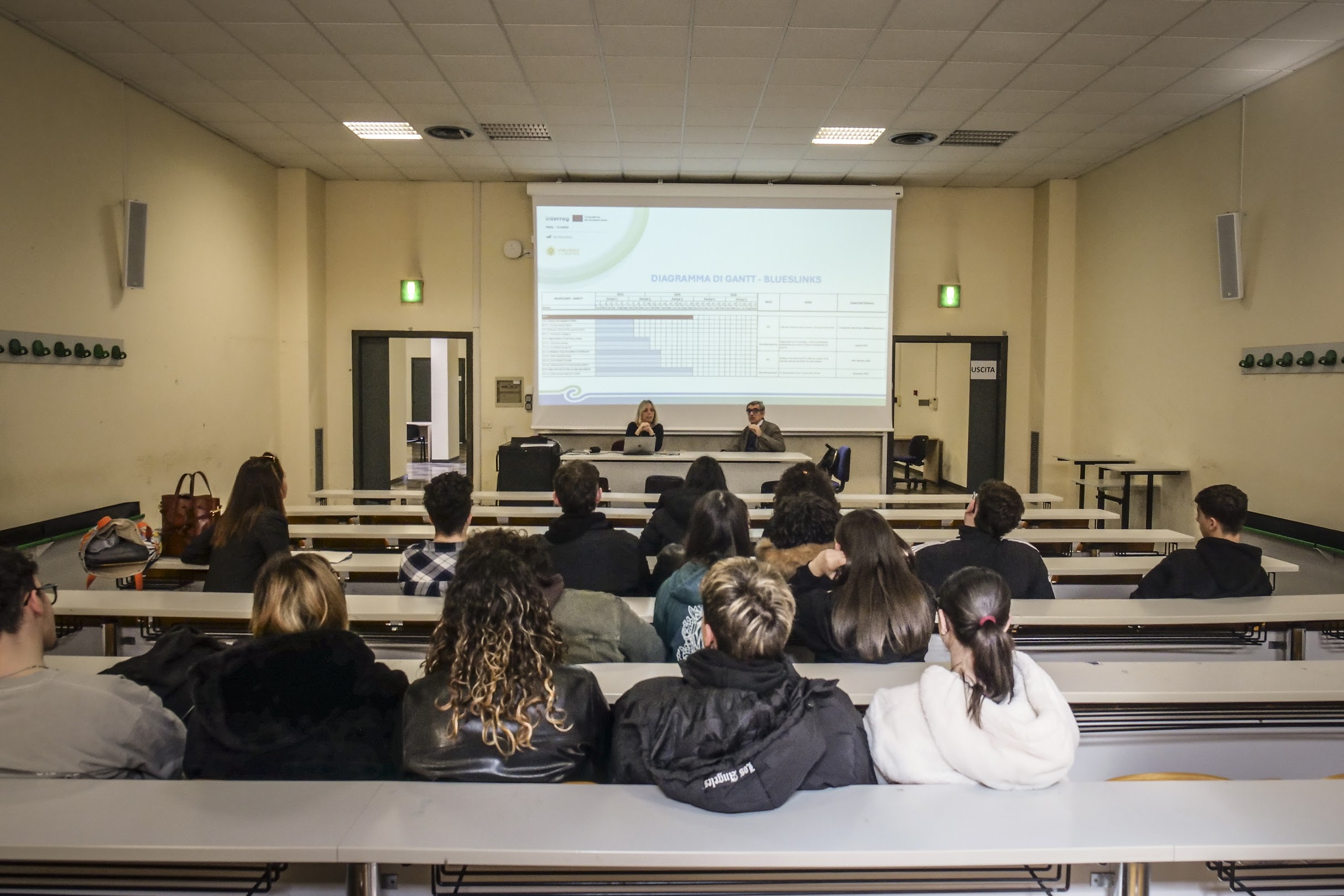 BLUESLINKS is a cross-border project aimed at modernising the traditional sectors of the Blue Economy (fishing, aquaculture, and nautical services), which have long been the backbone of the European maritime economy. The project addresses the difficulties these sectors face in accessing innovative pathways, particularly in maritime areas far from innovation centres, where the lack of digital and smart solutions keeps unemployment rates high and hampers the competitiveness of SMEs.Traditional maritime sectors suffer from an innovation gap that penalises both businesses and workers. BLUESLINKS intervenes by promoting smart specialisation (S3) and cross-border cooperation among development agencies, innovation centres, universities, and business support organisations, with the goal of bridging the gap between the supply and demand of skilled labour in the sector.
Main Objectives:
- To create a cross-border network favouring the adoption of S3 principles in the traditional sectors of the Blue Economy and maritime jobs
- To provide innovative and digital services to SMEs to support their transformation
- To activate three continuous match-making mechanisms to strengthen employment capacity at cross-border level
Foreseen activities
The BLUESLINKS interregional project has been structured around a series of interconnected activities, each carefully scheduled to ensure a progressive and coherent implementation of its objectives.
The process began with a company survey analysis, carried out from April to October 2024, which provided a comprehensive picture of the needs, challenges, and innovation gaps faced by SMEs operating in the traditional Blue Economy sectors. This initial phase laid the empirical foundation for all subsequent actions.
Building on the survey findings, Focus Groups were organised from April 2024 to January 2025, bringing together key stakeholders — including businesses, development agencies, and sector experts — to deepen the understanding of local needs and co-design targeted solutions for the maritime and Blue Economy workforce.
In parallel, the Innovation Hub Network was activated and developed from April 2024 to March 2025, establishing a cross-border ecosystem of innovation centres and support organisations capable of delivering smart and digital services to SMEs across the participating regions.
Finally, the Blue Economy for the Young Generation strand represents the most forward-looking component of the project, running from April 2024 to September 2025. This longer-term initiative focuses on engaging younger generations in Blue Economy careers and opportunities, fostering a culture of innovation and sustainability among the future workforce of the maritime sector.
Project origin
The BLUESLINKS project originates from the Interreg VI-A Italy-Croatia 2021-2027 Programme, funded by the European Regional Development Fund (ERDF). The programme was approved by the European Commission and launched specific public calls addressed to Italian-Croatian cross-border partnerships. BLUESLINKS was selected through these competitive procedures, in response to a public call requiring projects focused on innovation, employment, and sustainable development in cross-border maritime areas.Although the project sought to involve the main actors of the Blue Economy, some categories of stakeholders may have remained on the margins of the definition phase, including:
- Self-employed workers and micro-enterprises in the fishing sector, often less organised and harder to reach through institutional channels
- Young people and first-time job seekers, who represent an end target of the project but rarely participate actively in co-design phases
- More isolated rural coastal communities, with limited access to digital tools and institutional communication channels
- Foreign and migrant workers employed in the fishing sector, a category that is often invisible in formal participatory processes
Beneficiaries
The definition of the project involved a cross-border partnership composed of both public and private entities, including regional development agencies, innovation centres, universities, and business support organisations, operating on both the Italian and Croatian sides. The partnership was typically built through the following approaches.
Context
The cross-border maritime areas involved in the BLUESLINKS project along the Italian and Croatian Adriatic coasts present a series of structural challenges that fully justify the project's funding.
The traditional sectors of the Blue Economy, particularly fishing, aquaculture, and nautical services, remain an essential component of the local economy, yet they face increasingly pressing challenges. SMEs in the sector show a low propensity for technological innovation and limited access to European and national funding, while the more peripheral coastal areas suffer from isolation from innovation centres and high unemployment rates, further aggravated by the difficulty of attracting and retaining a skilled workforce. Added to this is the lack of effective tools to match the supply and demand of specialised labour in Blue Economy domains.
Progress
The information regarding the progress of the BLUESLINKS project was gathered through two main sources:
- Official BLUESLINKS project website, from which general project data, partnership information, and documentation related to ongoing activities were extracted:
- Monitoring visit to the partner University of Salento (UniSalento), during which the partner confirmed full compliance with the project timeline and provided direct updates on the status of activities.
Based on the information gathered, the BLUESLINKS project is regularly underway and fully on track with the established timeline. The monitoring visit to UniSalento confirmed compliance with the project timeline, with all activities launched and carried out within the timeframes set out in the work plan.
Results
The company survey successfully engaged SMEs operating in traditional Blue Economy sectors, ensuring that the project's services were designed around the actual needs of the beneficiaries. The involvement of students and young generations was addressed through dedicated dissemination days organised with university partners, including UniSalento, which confirmed active student participation during the monitoring visit.
In terms of concrete promotion of the Blue Economy, the project's participation in Ecomondo provided a high-visibility platform to showcase its outcomes to a wide audience of professionals and institutions. The hackathons proved to be particularly effective, bringing together SMEs, job seekers, and students in a dynamic matchmaking environment where new ideas and solutions for the Blue Economy were developed and tested.
Overall, the partial results achieved are consistent with the project's objectives and reflect a well-rounded approach to fostering innovation and employment in the traditional Blue Economy sectors. The project appears well on track to deliver its final outputs by September 2026.
Weaknesses
One weakness identified concerns the financial support provided to the SMEs involved in the project. Despite the fact that businesses were effectively reached and engaged through the survey, focus groups, and other participatory tools, they did not benefit from adequate direct financial support. This gap risks limiting their real involvement in the innovation process, as SMEs — often characterised by limited resources — find it difficult to initiate sustainable transformation pathways without concrete economic support for the necessary investments. The risk is that engagement remains largely formal, without translating into lasting structural change for the beneficiary companies.
Strengths
One of the main strengths of BLUESLINKS lies in its ability to start from a concrete analysis of the context and the real problems of SMEs operating in the traditional Blue Economy sectors. Through the company survey and focus groups, the project built an in-depth understanding of the specific needs of the territory, translating them into a targeted and relevant intervention programme, focused on three key areas: innovation, digitalisation, and matching labour supply and demand.
A further strength is represented by the project's capacity to network different actors, creating a complex and articulated participation system involving schools, universities, SMEs, and third-party organisations. This multi-level participatory architecture allows the challenges of the Blue Economy to be addressed in an integrated manner, fostering cross-pollination between the academic, productive, and institutional worlds, and generating concrete opportunities for matching those who offer and those who seek qualified employment in the maritime sector.
Risks
The main risk that could undermine the long-term effectiveness of BLUESLINKS is linked to the lack of financial continuity for the beneficiary SMEs. If the companies involved do not receive adequate and continuous economic support beyond the duration of the project, there is a concrete danger that the results achieved will remain confined to the project phase, without generating a structural and lasting impact on the local productive fabric.
In a sector such as the Blue Economy, characterised by rapid technological evolution, the risk is that the innovative solutions introduced by the project will quickly become obsolete, as SMEs lack the necessary resources to update, invest, and keep pace with innovation. Without a continuous financing mechanism, the project therefore risks proving to be an isolated intervention, unable to trigger the structural and sustainable transformation that represents its most ambitious objective.
Added to this is the risk that, once the project has concluded, the network of relationships and collaborations built between schools, universities, SMEs, and institutions may also dissolve, undermining one of the most valuable results of the initiative.
Ideas and solutions
To maximise the long-term impact of BLUESLINKS, it would be essential to establish a dedicated financial support fund for SMEs, to enable companies to continue investing in innovation and digitalisation beyond the conclusion of the project. It would also be advisable to institutionalise the Innovation Hub Network, transforming it into a permanent structure recognised and supported by regional authorities, thus preventing the collaborations built between schools, universities, SMEs, and institutions from dissolving at the end of the funding period.
Investigation method
How was the information collected?
- Web research
- Visit to the project's location, documented by pictures or videos
- Interview with people responsible for the project's implementation
For the purposes of monitoring the BLUESLINKS project, two key partners were involved through different approaches.
The first interlocutor was the University of Salento (UniSalento), the territorially closest partner. UniSalento hosted the monitoring visit, during which it was possible to gather direct information on the progress of activities, verify compliance with the project timeline, and gain a deeper understanding of the ways in which both companies and students were engaged.
The second interlocutor was Delta 2000, the lead partner of the project, to which a structured survey was sent with the aim of collecting up-to-date information on the partial results achieved by BLUESLINKS. The responses provided by Delta 2000 made it possible to complement the knowledge gathered during the visit to UniSalento, offering a broader perspective on the overall progress of the project and the objectives achieved to date.
Main questions
Question 1 (addressed to UniSalento — university partner of the project)
What do you consider to be the greatest strength of the project, also from a long-term perspective?
Question 2 (addressed to Delta 2000 — lead partner of the project)
How many and which match-making events have been planned and carried out to date?
Main answers
Answer 1: The greatest strength of the project is identified in the creation of dedicated Contact Points, namely concrete reference points to which companies can turn to address issues related to innovation in the Blue Economy. This tool represents a significant added value, as it offers SMEs direct and continuous support, bridging the gap that often exists between the world of innovation and the productive sector. (Unisalento)
Answer 2 : The partners have overall organised 6 events, broken down as follows: (delta 2000)
2 Hackathons, dedicated to competition and the development of innovative solutions for the Blue Economy
2 Innovation Open Days, open days aimed at fostering meetings between SMEs, innovators, and sector stakeholders
2 Young Area events, initiatives specifically aimed at engaging younger generations in the world of the Blue Economy